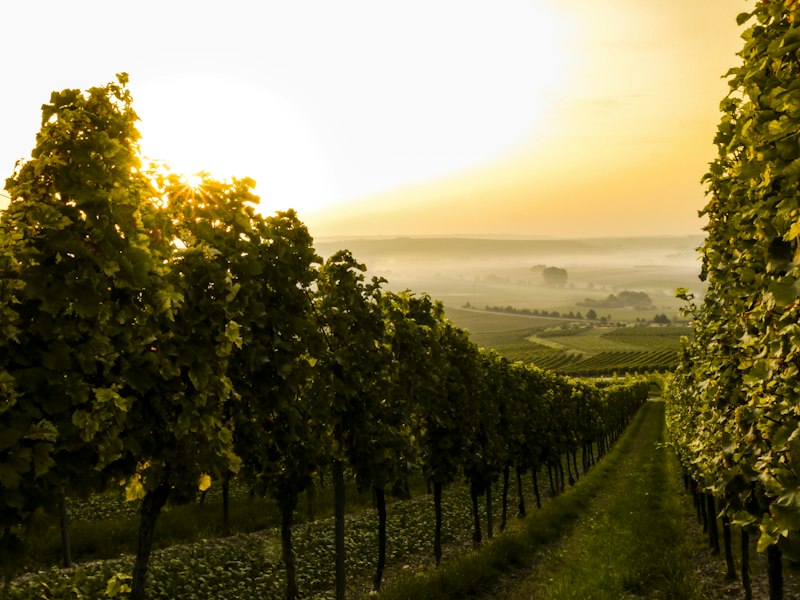
What is an AVA, and why does it matter? Understanding California's American Viticultural Areas is the key to understanding California wine.
An American Viticultural Area (AVA) is a designated wine grape-growing region in the United States distinguished by geographic features — climate, soil, elevation, and topography — that differentiate it from surrounding regions. Understanding AVAs is the key to understanding California wine, because place is the most powerful force shaping what ends up in your glass.
How the AVA System Works
The AVA system was established by the federal Alcohol and Tobacco Tax and Trade Bureau (TTB) in 1978, modeled loosely on the French appellation contrôlée system. Unlike the French system, however, American AVAs regulate only the geographic origin of the grapes — not the varieties that can be grown, the yields permitted, or the winemaking methods used. This makes the American system more permissive than its European counterparts, but also means that AVA designation alone is not a guarantee of quality or style.
To label a wine with a specific AVA, at least 85% of the grapes used to make that wine must come from that AVA. This is a meaningful requirement — it ensures that AVA-labeled wines genuinely reflect the character of their origin. The remaining 15% can come from anywhere, which gives winemakers flexibility to adjust blends without losing the appellation designation.
California has more than 150 federally recognized AVAs — more than any other state — ranging from large regional designations like "California" (which covers the entire state) and "Central Coast" (a 250-mile stretch from San Francisco Bay to Santa Barbara County) to highly specific sub-appellations like "Stags Leap District" (2,700 acres) or "Sta. Rita Hills" (30,000 acres).
Nested AVAs: The California Hierarchy
One of the most distinctive features of California's AVA system is its nested structure. Smaller, more specific AVAs are contained within larger ones, creating a hierarchy of geographic specificity. A wine labeled "Oakville" — a 6,200-acre sub-appellation of Napa Valley — must contain at least 85% grapes from Oakville. A wine labeled "Napa Valley" must contain at least 85% Napa Valley grapes, but those grapes could come from any of the valley's 16 sub-appellations.
This nesting creates a spectrum of specificity: "California" is the broadest designation; "North Coast" is more specific; "Napa Valley" more specific still; "Rutherford" even more so. As a general rule, the more specific the appellation, the more the wine is expected to reflect a distinct sense of place — and the more the producer is staking their reputation on the character of that specific site.
Why Place Matters: Terroir in California
The French concept of terroir — the idea that a wine's character is shaped by the totality of its growing environment, including soil, climate, topography, and even the human traditions of a place — is as relevant in California as it is in Burgundy. A Cabernet Sauvignon from Oakville, Napa Valley, grown in deep, well-drained alluvial soils with warm days and cool nights, will taste distinctly different from a Cabernet Sauvignon grown in the cooler, hillside soils of the Stags Leap District just a few miles away — even if both wines are made by equally skilled winemakers using identical techniques.
The differences are not subtle. Oakville Cabernet tends toward ripe black fruit, full body, and firm but polished tannins. Stags Leap Cabernet is typically more elegant, with softer tannins, more red fruit character, and a distinctive silky texture that has earned the sub-appellation its reputation for "iron fist in a velvet glove" wines.
California's Most Important AVAs
Napa Valley is California's most prestigious AVA and one of the world's most recognized wine regions. Its 16 sub-appellations — including Oakville, Rutherford, Stags Leap District, Howell Mountain, Spring Mountain, and Carneros — each produce wines of distinct character. Napa Valley Cabernet Sauvignon is the region's signature wine, but the valley also produces outstanding Chardonnay (particularly from Carneros), Sauvignon Blanc, and Merlot.
Russian River Valley in Sonoma County is California's benchmark for Pinot Noir and Chardonnay. The appellation's cool, fog-influenced climate and well-drained Goldridge sandy loam soils produce wines of extraordinary complexity and elegance.
Paso Robles has emerged as one of California's most dynamic AVAs, with a particular strength in Rhône varieties (Syrah, Grenache, Mourvèdre, Viognier) and Cabernet Sauvignon. The 2013 creation of 11 sub-appellations within Paso Robles has helped producers communicate the significant climatic and soil differences across this large appellation.
Santa Rita Hills (officially "Sta. Rita Hills" to distinguish it from a Chilean producer) is a small, intensely cool appellation at the western end of the Santa Ynez Valley in Santa Barbara County. The combination of cold Pacific winds, marine fog, and well-drained diatomaceous earth soils produces Pinot Noir and Chardonnay of remarkable concentration and longevity.
Lodi is California's most celebrated Zinfandel appellation, with seven sub-appellations that reflect the significant variation in soils and microclimates across this large region. The Mokelumne River sub-appellation, with its ancient sandy soils and old-vine Zinfandel, is the region's most prized designation.
Reading AVAs on the Label
When you see an AVA on a California wine label, ask yourself: how specific is this designation? A wine labeled "California" could contain grapes from anywhere in the state — it's a broad, catch-all designation often used for value-priced wines. A wine labeled "Napa Valley" is more specific and carries a stronger quality implication. A wine labeled "Oakville" or "Rutherford" is making a very specific claim about its origin — and charging a premium for it.
The most important thing to remember is that AVAs are geographic designations, not quality classifications. Unlike Bordeaux's château classification or Burgundy's Premier Cru and Grand Cru system, American AVAs do not rank vineyards or producers by quality. The quality signal comes from the producer's reputation, the vintage conditions, and — ultimately — what's in your glass.